⬅️ All 💬 Thoughts 📖 Posts 📡 RSS

Replacing capacitors on my Wurlitzer 200A electric piano

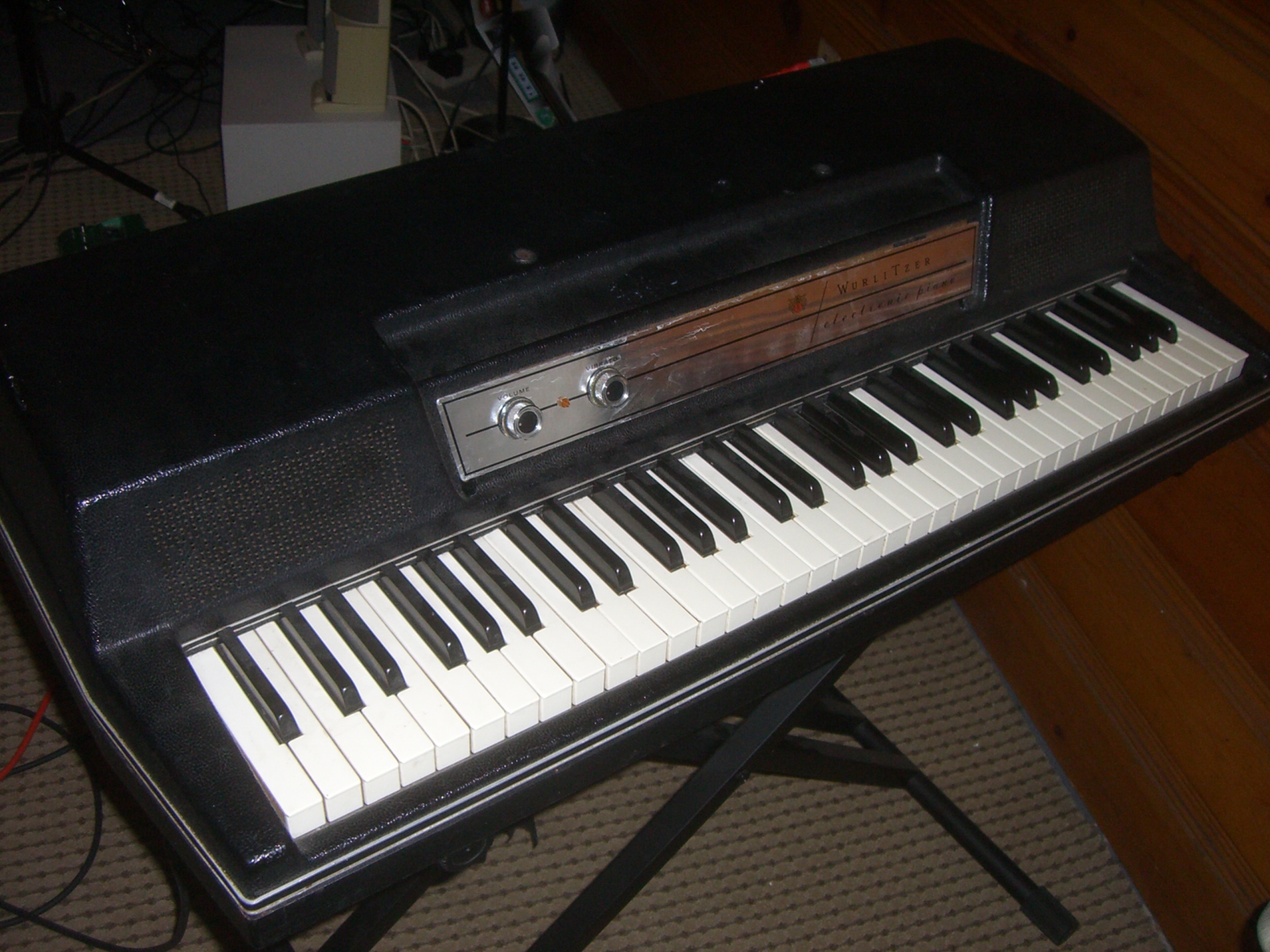
Things get old. Things eventually do not work anymore. Even the best engineers cannot design a system for part failures (unless they have triple redundant systems, like NASA). It is for this reason, I have decided to document on my blog the tune up of my Wurlitzer 200A electric piano (seen below) as opposed to the usual analog issues in the workplace today.

I mentioned this piano in my post about keeping it simple, namely not replacing EVERY component, only the ones that require an upgrade/replacement. It is a famous piano that can be heard in many types of music, spanning rock, soul, jazz and more.  Similar to the Fender Rhodes, the Wurly can be characterized by a darker, more over-driven sound and a built in vibrato (constructed from a simple oscillating circuit).

How does an op amp work? How do I use an op amp? — Part 1

How does an op amp work? How do I use an op amp

These are questions that I have asked at two periods in my life. The first time was in my introductory circuits class and around that time I really didn’t care (beer was a priority). The second time was when I dove headfirst back into analog electronics for my new job and had to re-teach myself a lot of things. I really appreciate the opportunity I had to re-learn everything because the second time around, I think I got it right.

Keep it simple, stupid

Keep it simple, stupid

The KISS principle is pertinent in nearly every aspect of my life. I can’t begin to relay the number of times I have had to convince myself to step back from a situation–engineering or otherwise–and ask what the simplest solution is. Be it electronics at work or at home, renewable energy or even my investing, I encounter the KISS principle over and over again.

A tenet of the ever-expanding chip market is that the more functions that were once done with discrete components and can now be moved into the confines of a chip, the better. This is done either directly on silicon or by setting multiple pieces of silicon next to each other in the plastic packaging and wiring them together. This idea started a long time ago but is being to manifests itself in many different ways. One of the earliest examples is the op-amp. True, the form and function of the op-amp is different than the cascodes and the vacuum tubes that preceded it; but the idea of bringing the capacitor (to control the slew rate) and the transistors required to drive the differential inputs and the output all into the same package were just the first examples of combining discrete elements into an easily re-usable device was new. Another driving force was the idea that this device can be mass produced and sold at a lower cost thanks to economies of scale. More recently we have seen more and more functions brought into the chip packaging. One such example is the FPGA, which not only reduces the need for external logic gates in some bulky package, but it also makes it reconfigurable. And now, predictably enough, this same concept is being brought into play with analog! There are now chip manufacturers that make Field Programmable Analog Arrays (FPAA). Usually this consists of an op-amp, some analog switches and passive components, such as resistors and capacitors (for filtering). The device can be “programmed” to select any number of functions, with the potential for ever increasing complexity (though signal integrity would be a concern of mine). The final example is a product offering called the uModule from Linear Technology, with others doing similar things. It is an interesting concept because they are bringing in even more discrete components, such as inductors on a DC-DC converter; inductors are typically set outside the chip because of size concerns.
My name is Chris…and I'm an analog engineer

Or am I?

I read technical publications on a pretty regular basis. And more and more lately, especially with the lull in the economy, I read about how jobs are going offshore or overseas. Sure, this concerns me, I’m human! Plus, I’ve inherited a worrisome nature from my mother. But I’ve had the fortune of reading a lot of articles about how analog engineers are in short supply. Even how they’re moving into green technologies!

Alltop

Welcome Alltop visitors!

I am unfortunately becoming an information junky. I have friends in DC and they have mentioned on multiple occasions that this is the norm at least in our nation’s capital; that people consider being news-knowledgeable to be a social status. Well, I guess I’m part of it; I love being connected and being in the know, especially about engineering and analog electronics. Don’t worry though, I’m still pretty low on the social ladder and I like it that way :).

Great resources for learning about analog electronics

I am absolutely floored by the internet every single day. I often wonder to myself if given the proper linking, guidance and mentoring, whether schools are even necessary any more (maybe the different methods are exactly what we need). This would of course also require some strong drive to learn and a whole lot of time on your hands, not to mention eyes that can bear reading computers screens all day. But I think it is possible; Some schools have even offered up their entire course catalogs online.

Inventions for the future

I was talking to my friend the other day about ways to become rich and famous. Surprisingly, blogging was not on the list :-). The best I could come up with for an engineer like me was to invent something and sell it. Even better, invent one thing, manufacture it, use the profits to invent something else, and so on.

Then I started thinking about it and the thoughts of money and fame kind of melted away. Sure, that’d be nice, but what does the world really need invented? What could change the world? What could start the next revolution (i.e. industrial, technological, etc)? Where is the future taking us and most importantly where are WE taking the future?

Analog Definition

I have been working on a doozy of a blog post for about a week now. It’s almost there and I will definitely release it this week. However, in the interim I have been thinking about my blog and my (analog) life and realize I’ve never really defined it for many people. And like some others, I get questions about it:

What is Analog? What is my definition of Analog?

Analog is everywhere. Analog is the opposite of digital. It is continuous. It is real. Analog are the sights we see and the sounds we hear. Analog is the beauty of a symphony and the complexity of a transistor.

Should I get a PE license?

I’ve never thought of myself as particularly upwards mobile in my career (yet). I’m actually very happy where I am right now, learning as much as I can and progressing through the rigorous on the job learning and tribulations I’ve been experiencing so far. However, the sign of a good career path is one where you are surrounded by people who both push you and are good role models for you. I am lucky to be in such a situation and as such, am thinking about getting my Professional Engineer (PE) certification.

LED supply chain

http://www.edn.com/article/CA6571020.html?nid=2437&rid=2069959399

As LED lighting and nearly all aspects of energy saving and/or renewable energy come into focus in the real world, we need to keep an eye on the economics of it all. You know the big players are. Big attention means big money and as you can see, lots of people want a slice of the action.

A quick synopsis of the above article could be: LEDs don’t work on their own…people need to buy other stuff. I have already written about one such component, the LED driver, in the past few weeks. Other than touching on drivers, the article also mentions other aspects of LED design including heat management, logic control and LED internals. Each of these parts of the whole design will need to ramp production in order to introduce economies of scale on each part level. The most striking number from the above article is that for every dollar spent on a LED (in this case a HB LED, used in commercial and residential lighting), the user must also spend $2-5 on auxillary components. This means that as the use of LEDs increase, so shall the semiconductor interest in driving those LEDs.